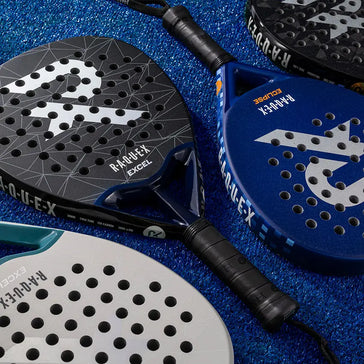
We're proud to share that Raquex has been named Best Racket Brand at the inaugural British Padel Awards 2026. The ceremony took place on 16 May at Manchester's Victoria Warehouse, a black-tie event that brought together over 600 players, coaches, clubs, creators and industry leaders to celebrate the sport's remarkable growth across the UK.
Being recognised in this way by the padel community means everything to us. This award reflects the work of a lot of people: our customers, partners, the clubs we work with, and the players who trust us with their game.
"We're incredibly honoured to receive this award. The British Padel community has grown at an unbelievable pace, and to be recognised by the industry in this way is a huge moment for our team. This award reflects the passion of everyone involved with Raquex, from our customers and partners to the players and clubs who continue to support us."
Olly Rose, Raquex
What the judges said
The British Padel Awards were founded by Anthony Daulphin and headline sponsored by CUPRA, created to spotlight the individuals and brands genuinely moving the sport forward. Speaking about the Best Racket Brand category:
"In a hugely competitive category, the judges felt Raquex consistently demonstrated innovation, strong community engagement and a clear commitment to the future of the sport."
Anthony Daulphin, Founder, British Padel Awards
Padel in the UK: a landmark moment
The recognition comes at a pivotal time for British padel. The LTA recently confirmed that the UK now has more than one million padel players, with over 1,825 courts across 551 venues nationwide. It's a sport that's moved from niche to mainstream in a remarkably short space of time, and we're proud to have been part of that journey.
1M+
UK padel players
1,825
courts nationwide
551
venues across the UK
What's next
This award is a milestone, but it's not a finish line. Our focus stays where it's always been: making premium padel equipment more accessible, continuing to innovate, and supporting the community that makes this sport what it is.
"This is an exciting time for padel in Britain, and we're proud to be part of that journey."
Olly Rose, Raquex
Thank you to the organisers of the British Padel Awards, the judging panel, and everyone in the UK padel community who continues to back us.
England international and LTA Top 10 player joins premium UK brand to support the next phase of padel’s growth
London, United Kingdom - 24 March 2026 - England international and LTA No. 6 padel player Jasmine Dedakia has signed a long-term partnership with British racquet sports brand Raquex, following her recent Four Nations victory with England.
The announcement comes off the back of England’s win at the Four Nations tournament, where Dedakia represented the national team, marking a strong start to the 2026 season.
The partnership comes at a time of rapid expansion for padel, with the UK emerging as a key growth market. As participation and investment accelerate, both athlete and brand are positioned to play an active role in the sport’s next phase of development.
One of the UK’s Leading Padel Players
A former national-level tennis player, Dedakia transitioned into padel with a strong technical foundation and has quickly established herself on the international stage representing England. Known for her aggressive playing style and dominant net game on the right side, she has secured multiple Grade 2 titles, reached a recent Grade 1 final, and most recently helped England secure victory at the Four Nations.
Balancing a full-time career alongside elite competition, she represents a new generation of athletes, combining high performance with relatability and growing appeal across both sporting and lifestyle audiences. Off court, she is committed to supporting young female athletes and has raised funds for Fibromyalgia UK through the London Marathon.
Why the Partnership Matters
Raquex, founded in the UK, has built its reputation on performance-led design, technical precision and athlete-informed product development, with a growing focus on padel as part of its wider expansion strategy.
The partnership reflects a shared long-term vision to elevate performance standards, support innovation in racquet sports and contribute to the continued growth of padel in the UK and beyond.
Jasmine Dedakia on Joining Raquex
Jasmine Dedakia said:
“This partnership with Raquex feels like a really natural step for me. I’ve been looking for a brand that genuinely cares about performance and understands what the game demands day to day, and that came through straight away with them. Their attention to detail, how seriously they take product, and the way they build relationships with their athletes really stood out.
I’m looking forward to getting stuck in with the Raquex team, both on court and behind the scenes, and being part of how things continue to develop.”
Raquex on the New Partnership
Oliver Rose, Founder of Raquex, said:
“Our belief has always been to create a genuine difference through our products, but that has to start with the people using them. Partnering with Jasmine is, first and foremost, about supporting a player of her calibre in the way an elite athlete should be supported.
By providing that foundation, we gain the real-world insight we need to keep refining our gear. When we put the player’s needs first, the product innovation follows naturally.”
About Jasmine Dedakia
Jasmine Dedakia is an England international padel player and one of the UK’s leading emerging talents, ranked as high as LTA No. 6. A former national-level tennis player, she has transitioned successfully into padel, earning multiple titles and representing England in international competition.
Known for her aggressive playing style and strong net game, she combines elite performance with a full-time professional career. Off court, she is committed to supporting young athletes and charitable causes, including Fibromyalgia UK.
About Raquex
Founded in 2019, Raquex is a performance-led racquet sports brand focused on helping players compete at the highest level through considered design, technical precision and athlete-informed development.
Built on more than 25 years of racquet sports experience, the company combines product innovation with a commitment to growing the wider playing community. Its guiding philosophy is simple: Outplay Ordinary.
Raquex Elite padel balls are now officially approved by the International Padel Federation (FIP), marking an important milestone for the brand and for players looking for trusted, competition-ready performance. The Elite range is now listed on the federation’s official website, confirming that it meets the standards required for use in sanctioned competition.
For Raquex, this is more than just a badge. It is independent recognition that the Elite ball range has been built to deliver the consistency, durability and performance serious players expect. It also gives clubs, coaches, retailers and tournament organisers greater confidence when choosing balls for training, match play and official events.
What FIP Approval Means in Padel
The International Padel Federation is the global governing body for padel. It oversees international competition and sets the technical standards used across the sport. To gain approval, balls must meet strict benchmarks for size, weight, bounce, internal pressure and durability. These are not light checks. They are designed to ensure that approved products perform consistently and reliably in competitive conditions.
That matters because players and venues need equipment they can trust. For players, FIP approval means the ball is expected to behave consistently during rallies, training sessions and matches. For clubs and tournament organisers, it means using equipment that aligns with recognised regulations and professional standards. In a sport growing as quickly as padel, that level of reassurance has real value.
Which Raquex Padel Balls Are Approved?
The Raquex Elite yellow padel ball holds full FIP Approval, confirming it meets the technical and performance requirements for international competitive play. This is the flagship ball in the range and the one built specifically for high-level performance.
Alongside it, Elite: Pace and Elite Pink Padel Balls carry the FIP Specification designation. These are produced to the same approved grade, with only minor differences in pressure and colour. A forthcoming Elite White ball is also expected to carry the same FIP Specification designation once it launches.
This gives players more choice across the Raquex Elite padel ball range while maintaining the same quality-led positioning. Whether you want a match-ready ball for competitive use, a dependable option for coaching, or a premium padel ball for serious training sessions, the Elite range is designed to meet that need.
Why This Matters for Raquex
Raquex was founded in 2019 and built on more than 25 years of racquet sports experience. From the outset, the brand has focused on developing products that genuinely help players perform better, rather than chasing short-term trends. That performance-led approach is central to the story behind this approval.
As founder Oliver Rose puts it, performance has always been the priority, and receiving FIP approval is a proud moment because it confirms that the Elite ball delivers the consistency and durability serious players expect.
Raquex is now one of only two UK-based brands to appear on the FIP-approved list. That is a strong trust signal for players, clubs, coaches and retailers comparing options in an increasingly competitive market.
What FIP-Approved Padel Balls Mean for Clubs and Venues
Padel continues to grow rapidly, and with that growth comes higher expectations around the quality of facilities, coaching and equipment. For clubs, academies and tournament organisers, using FIP-approved padel balls is a practical way to show commitment to recognised standards. It helps ensure players are training and competing with balls designed to perform at the level the sport demands.
For venues running coaching sessions, leagues, tournaments or club nights, certified equipment adds credibility. It helps create a better experience for players and shows that the venue takes performance seriously. For distributors and retailers, it provides a clear point of difference at the point of purchase, especially when many alternatives may not carry the same certification or specification status.
A Major Step Forward for the Raquex Elite Range
Official FIP approval gives the Raquex Elite range a stronger place in the market and provides players with added confidence in what they are buying. It confirms that the Elite yellow ball meets the standards required for sanctioned competition, while the wider range continues to offer premium options produced to the same approved grade.
For players, coaches, clubs and retailers, the message is simple. Raquex Elite padel balls are built for serious performance and now carry the certification to prove it. As the game continues to grow, that combination of quality, trust and governing-body recognition will matter more than ever.
If you are a club, coach, retailer or distributor interested in the Raquex Elite range, now is the perfect time to explore the benefits of using FIP-approved padel balls. For players who want consistency, confidence and high-level performance, the Elite range offers a trusted option backed by official recognition.
Shop Elite Padel Balls
If you’ve ever picked up a padel racket and wondered how something so solid, lightweight, and precise is actually made, you’re not alone. It’s a question many players ask once they start taking the game more seriously.
Unlike a strung tennis racket, a padel racket is a single, solid structure, aside from the foam inside. Its performance comes not from strings, but from a carefully engineered combination of materials, layering, heat, pressure, and finishing work. Most people don't realise that the foam is one of the most important elements to how a racket performs, too.
Every stage of the manufacturing process plays a role in how the racket feels in your hand and performs on court.
Because we manufacture our own international padel federation-specification rackets at Raquex, we see this process from start to finish. What follows is a clear, behind-the-scenes look at how padel rackets are made, from raw materials to the finished product.
How Padel Rackets Are Made (At a Glance)
An EVA foam core is shaped to define feel, comfort, and response
Heat and pressure cure the racket into a solid structure
Fiberglass or carbon fibre layers are built around the core (we don't use any inferior fibreglass blends like most other brands - ours are pure carbon)
Holes are drilled to refine aerodynamics and sweet spot behaviour
The racket is finished, fitted with a handle, and quality checked
Each step influences how the racket performs; none of it is accidental.
Step 1: The EVA Foam Core (Comfort, Power & Feel)
Everything starts with the core. Often described as the “heart” of the racket, the core has a major influence on comfort, control, and power.
Most padel rackets use EVA (Ethylene Vinyl Acetate) foam. This rubber-like foam is cut into the exact shape of the racket head before any outer layers are applied.
The density of the EVA foam is critical. Softer EVA compresses more on impact, offering greater comfort and a larger sweet spot. Firmer EVA deforms less, delivering a more direct response that experienced players often associate with control and power.
Different rackets use different EVA densities depending on the type of player they’re designed for. This is one of the main reasons two rackets with similar shapes can feel completely different on court.
Step 2: Heat, Pressure & the Moulding Process
This stage is where the racket truly takes shape.
The layered structure, EVA core, fibre sheets, and resin is placed into a steel mould shaped like the final racket. The mould is then subjected to carefully controlled heat and pressure.
During this curing process:
The epoxy resin hardens, bonding all layers into a single structure
The EVA foam compresses to its final working density
The racket gains its strength, durability, and final shape
Precision here is essential. Too much heat or pressure can damage materials; too little can lead to weak bonding or inconsistent performance.
Step 3: Fiberglass vs Carbon Fibre Layers
Once the core is prepared, the racket’s structure is built by layering high-performance materials around it. These layers form both the frame and the face of the racket.
The two most common materials used are fiberglass and carbon fibre.
Fiberglass is more flexible and forgiving. It tends to offer a softer touch and a slightly higher trampoline effect, which can help generate power with less effort. Because of this, it’s often used in rackets aimed at beginner and intermediate players. However the big draw back is that fibreglass is much weaker and breaks easily.
Carbon fibre is stiffer, lighter, and more durable. It provides a more precise response and greater stability, especially on fast or off-centre hits. Higher-end rackets may use different carbon weaves, such as 3K, 12K, or 18K carbon, to fine-tune stiffness and feel. The higher the “K” number, the more filaments per thread, resulting in a crisper response.
These material layers are impregnated with epoxy resin, which will later harden and bind everything together.
Step 4: Drilling, Finishing & Quality Control
After moulding, the racket is structurally complete but far from finished.
First up is sanding and cosmetic finishing. The surface is smoothed, paint and graphics are applied, and a protective coating is added to improve durability.
Next, the holes are drilled into the face. These aren’t decorative; their placement affects aerodynamics, balance, and how the racket flexes across the sweet spot.
The handle and grip are then fitted, along with the mandatory safety cord required for padel play.
Finally, each racket goes through quality control. Weight, balance, finish, and overall consistency are checked to ensure it meets performance standards before it ever reaches a court. We weigh every racket once it's finished and mark that on the racket's packaging. This means we can hand pick a racket to suit your weight needs if you want us to.
Your browser does not support the video tag.
Why Manufacturing Quality Matters in Padel
Because padel rackets are solid, small variations in materials or construction have a big impact on performance. Manufacturing isn’t just about assembling parts, it’s about consistency.
This is why two rackets that look similar can feel completely different. The way the EVA foam is prepared, how layers are aligned, and how the racket is cured all influence durability, comfort, and playability.
What This Means for Your Game
When you choose a well-designed padel racket, you’re holding the result of a highly controlled manufacturing process. Every material choice and production step affects how the racket moves, feels, and responds on court.
The holes, the balance, the touch, none of it is accidental. Good racket design isn’t about one standout feature, but how everything works together.
Understanding how padel rackets are made makes it easier to appreciate why the right racket can help you improve your game, and why quality construction really does matter.
Frequently Asked Questions About Padel Racket Manufacturing
What materials are padel rackets made from?
Most padel rackets use an EVA foam core combined with fiberglass or carbon fibre layers bonded with epoxy resin.
Are all padel rackets made the same way?
The overall process is similar, but materials, layer counts, carbon weaves, and curing methods vary significantly between rackets.
Is carbon fibre better than fiberglass?
In short, we believe so. Our manufacturing techniques allow us to retain the few benefits of fibreglass, without all of the drawbacks that fibreglass has. Fibreglass doesn't feel anywhere near as good as carbon when hitting, and makes rackets fragile.
Does manufacturing affect durability?
Yes. Proper curing, high-quality materials, and accurate drilling all play a major role in how long a racket lasts.
How long does it take to make a padel racket?
From core preparation to final inspection, the process typically spans multiple stages and around 15 hours' work depending on the model, spread out over around four weeks.
Pick up any padel racket for the first time and one thing stands out immediately: the face is full of holes.
It’s one of the defining visual differences between padel and other racket sports, and it’s also one of the most misunderstood. Many new players assume the holes are simply there to reduce weight, while others think more holes automatically mean more power. In reality, neither explanation tells the full story.
The holes in a padel racket are a carefully engineered feature. Their size, number and placement all influence how the racket moves through the air, how it feels on contact, and how forgiving it is when you don’t quite catch the ball cleanly. In other words, they play a quiet but significant role in almost every shot you hit.
Speed Starts With the Swing
One of the first things players notice when switching between rackets is how fast or slow a racket feels through the air. That sensation is heavily influenced by aerodynamics.
Because padel rackets have a solid face, swinging a racket without holes would create a huge amount of air resistance. The holes allow air to pass through the face rather than pushing against it, which reduces drag and makes the racket easier to accelerate.
This matters more than people realise. Faster swing speed doesn’t just help on big smashes; it affects reactions at the net, defensive blocks, and even recovery between shots. A racket that cuts cleanly through the air simply feels more responsive, especially during fast exchanges where there’s no time to think.
It’s the same principle used in other sports and engineering disciplines, controlling airflow to improve efficiency, just applied on a smaller, more precise scale.
What this means in real play:
Faster swing speeds, especially on overhead shots and smashes
Quicker reactions at the net during fast exchanges
Less effort is required to generate pace, particularly important during long matches
Why Holes Matter for Weight
Weight reduction is another obvious function of the holes, but again, it’s more nuanced than “less material equals lighter racket”.
Padel rackets are solid, so without removing material, they would be far too heavy to play with comfortably. Drilling holes into the face allows manufacturers to bring the overall weight down to a usable range, but more importantly, it gives them control over where that weight is removed.
That weight distribution affects balance, and balance affects everything from control to fatigue. A racket that feels easy to manoeuvre at the net but still stable on contact hasn’t got there by accident; the hole layout plays a big part in that.
Over a long match, this also has a physical impact. A racket that’s properly balanced places less strain on the arm and shoulder, which is especially important for recreational players or anyone prone to elbow or shoulder discomfort.
Benefits of reduced weight:
Improved manoeuvrability, especially in quick rallies
Less strain on the arm and shoulder, reducing fatigue
Better control on touch shots like drop shots and soft volleys
The Sweet Spot Is Where Hole Design Really Shines
If there’s one area where hole design makes the biggest difference, it’s the sweet spot.
When the ball hits the racket face, the material flexes. The holes act as controlled “release points”, allowing the face to flex more evenly rather than stiffening or twisting unpredictably. A well-designed hole pattern helps spread that flex across a larger area of the face.
The result is a racket that feels forgiving. Shots hit slightly off-centre still come off the face with reasonable pace and control, instead of dying or vibrating harshly in your hand.
This is why beginners often feel instantly more comfortable with certain rackets, even if they can’t explain why. A generous sweet spot builds confidence, encourages cleaner technique, and makes the game more enjoyable. More advanced players may trade some of that forgiveness for precision, but even then, the way the holes are arranged will influence how connected the racket feels on impact.
Do More Holes Actually Give You More Power?
This is where a lot of marketing myths creep in.
More holes do not automatically mean more power. In fact, power in padel is influenced far more by balance, racket shape, core density, and face material than by the number of holes alone.
What the holes do help with is swing speed and consistency. A racket that moves quickly through the air and rebounds predictably can help you generate power more efficiently, but it’s not the same as raw power being “built in”.
Poorly designed drilling can even have the opposite effect, making a racket feel unstable or hollow. That’s why two rackets that look similar on paper can feel completely different on court.
Padel Hole Patterns
It’s tempting to look at a racket face and see holes as just… holes. But padel manufacturers obsess over the pattern.
Some rackets use uniform spacing for a consistent feel, while others vary the size and spacing depending on where they want the racket to flex more or less. You’ll often see tighter patterns towards the edges for stability, with more open spacing around the sweet spot to enhance forgiveness.
This is also where brand identity starts to show. Higher-quality rackets tend to feel more refined, not because of one single feature, but because all of these small decisions, including drilling patterns, work together.
How Racket Shape and Hole Design Work Together
Hole design doesn’t exist in isolation. It’s closely tied to the overall shape of the racket.
Round rackets usually combine forgiving hole patterns with lower balance points to maximise control. Tear-drop shapes aim for balance, using drilling patterns that support both touch and attacking play. Diamond-shaped rackets often feature more aggressive layouts designed for experienced players who generate their own control and want maximum attacking potential.
Understanding this relationship makes it easier to choose a racket that complements your level, rather than fighting against it.
A Note on Regulations
Padel racket design isn’t a free-for-all. The International Padel Federation (FIP) regulates hole size and placement to ensure rackets remain safe, fair, and consistent in competition.
These regulations still allow plenty of room for innovation, but they prevent extreme designs that could undermine the integrity of the game. When you buy a quality racket, you’re getting a product that balances creativity with compliance.
Under FIP regulations:
Rackets must include holes in the face
Hole diameters in the central area must fall within regulated limits
Designs must not compromise fairness or safety
What This Means for Your Game
The holes in a padel racket are one of those features you stop noticing once you start playing, but they’re quietly working on every shot.
They help the racket move faster through the air, feel lighter and more balanced in the hand, and remain forgiving when contact isn’t perfect. Most importantly, they’re a reminder that good racket design is about harmony between multiple elements, not just one headline feature.
When you choose a well-designed padel racket, every hole has been put there for a reason.
How long padel balls last is one of the most common questions players ask, and for good reason. Ball performance directly affects bounce, control, speed and the overall quality of your game. As a padel equipment specialist, we can confirm that most padel balls perform at their best for around 2 to 5 matches, although exact lifespan depends on pressure, temperature, court surface, playing style and ball quality.
Here we discuss every factor that influences ball durability, including a few topics many players overlook, so you know exactly when to replace your balls and how to get the most out of every can.
Why Padel Balls Don’t Last Long
Padel balls are pressurised, which gives them their speed and lively bounce. Once you open a can, pressure immediately begins to escape through the porous rubber. This gradual loss of pressure is why padel balls have a relatively short working life compared with other sports balls.
As internal pressure drops, the ball becomes:
Flatter and less responsive
Heavier in feel
Lower in bounce
Harder to control off the back glass
This is the primary reason padel balls “die”, and it happens to all balls, regardless of brand.
Typical Padel Ball Lifespan
For most players, the following guide is reliable:
Ball Condition
Typical Lifespan
Performance Impact
Optimal
1–3 matches
Maximum bounce and speed. Ideal for competitive or high-intensity play.
Usable
3–5 matches
Reduced bounce; suitable for social or casual matches.
Dead
5+ matches
Flat, heavy and inconsistent. Should be replaced.
Key Factors That Affect Padel Ball Lifespan
1. Playing Intensity and Style
Power players who hit with pace wear balls out faster. Aggressive smashes and fast rallies stress the rubber, accelerating pressure loss. More controlled, slower play results in slightly longer lifespans.
2. Court Surface
Some courts have more sand or a rougher finish. These surfaces:
Wear felt more quickly
Reduce aerodynamics
Make the ball feel heavy earlier
Create an inconsistent bounce
Matches on abrasive courts will shorten ball life.
3. Temperature, Weather and Altitude
Heat
Heat increases internal pressure, which speeds up air loss. Balls go flat faster on hot days.
Cold
Cold conditions make rubber stiff, reducing elasticity and lowering the bounce even when pressure is decent.
Rain or Moisture
This is a factor many players overlook. Moisture:
Saturates the felt
Adds weight
Slows the ball dramatically
Damages the felt long-term
Avoid playing in the rain if you want your balls to last.
Altitude
At higher altitudes, air pressure is lower. Balls:
Feel livelier initially
Lose pressure faster over time
Become more unpredictable
Altitude doesn’t impact most UK players, but it’s worth noting for travel or tournaments abroad.
4. Frequency of Use
Even unused balls slowly lose pressure once the can has been opened. Regular players will naturally replace balls more often.
Tip for bulk buyers: look for the manufacture date to ensure your cans are fresh.
5. Ball Quality and Brand Differences
Not all padel balls use the same materials or manufacturing standards. Premium balls, such as the Raquex padel ball range use:
Higher-grade rubber
Better felt blends
More stable pressurisation
This results in:
A more consistent bounce
Longer lifespan
Reduced wear in high-intensity rallies
Cheaper balls may flatten quickly, wear unevenly or lose felt after just a couple of matches.
Training Balls vs Match Balls
Many players use old or partially worn balls for training, saving new cans for matches. This makes sense because:
Training sessions don’t require perfect bounce — repetition matters more.
Match play benefits greatly from consistent, lively, high-pressure balls.
If you want the most accurate feel for competition shots, start every match with a fresh can.
How to Tell When a Padel Ball Is “Dead”
You don’t need specialist equipment, just use this checklist.
1. Squeeze Test
A good padel ball feels firm and resists pressure. If it compresses easily, the pressure is gone.
2. Bounce Test
Drop the ball from shoulder height:
A good ball bounces to waist height or above.
A dead ball may only reach knee height.
3. Felt Condition & Colour
Look for:
Excessive fluffiness
Bare or thinning patches
Faded colour
Brand logo no longer visible
These all reduce aerodynamic stability.
4. Flight and Bounce Consistency
If the ball:
Flies oddly
Bounces inconsistently
Loses speed unusually fast
... it’s time to replace it.
5. Sound Test
A healthy ball produces a crisp “pop”. A dull “thud” indicates low pressure.
How to Extend the Life of Your Padel Balls
While no ball lasts forever, you can slow down pressure loss and wear.
1. Use a Ball Pressuriser
This is the most effective method. It stores balls under pressure, reducing air escape between matches. Pressurisers don’t restore balls to factory pressure; they simply preserve the pressure that’s already inside, delaying the point at which the ball goes flat.
2. Only Open Cans When Ready
Once opened, pressure loss begins. Keep cans sealed until the moment you need them.
3. Store Balls Correctly
Keep unused balls:
Away from heat
Out of direct sunlight
In a cool, dry space
Heat accelerates pressure loss significantly.
4. Avoid Playing in the Rain
Moisture destroys felt quickly and affects bounce permanently.
Choosing the Right Ball for Reliable, Consistent Play
Padel balls will always lose pressure and performance over time, but understanding how and why it happens helps you make informed decisions about when to replace them. For competitive or high-intensity games, using fresh, high-quality balls makes a noticeable difference to control, consistency and overall pace.
Our Raquex Elite padel balls excel in tough conditions. We believe we have created the perfect padel ball - designed for durability, stability and all-weather performance. We put the "it's just a ball" theory to the test and produced the padel ball, one like no other.
If you’ve ever picked up a pack of squash balls and wondered why they have different colored dots, you’re not alone. The choice can be confusing, but it matters more than you might think. Using the right ball for your skill level and environment can completely change how enjoyable and effective your game feels.
Let’s break it down clearly and simply.
Understanding the Dots
The coloured dots on squash balls indicate their speed and bounce. The slower the ball, the less bounce it has, and the more effort is required to keep it warm and lively during play. This is why advanced players often prefer slower balls; it demands more skill, power, and consistent hitting.
The slower the ball, the less bounce it has, and the warmer you’ll need to keep it during play.
Advanced players usually prefer slower balls because they demand better technique, power, and consistency. Beginners and developing players, on the other hand, benefit from faster balls that stay lively and allow for longer rallies.
Why the Right Ball Matters
Using the correct squash ball for your skill level and court conditions can significantly impact your game:
Enjoyment: The right ball makes the game more fun and less frustrating.
Skill Development: It allows you to focus on improving your technique and strategy rather than constantly chasing a dead ball.
Safety: A ball that's too slow for your level can lead to over-hitting and potential injuries.
🟡🟡 Double Yellow Dot — The Professional Standard
Characteristics: This is the slowest, lowest-bouncing ball on the market. It requires consistent, powerful shots to keep it warm and playable. If it cools down, it will “die” quickly in the corners.
Who it’s for: Advanced and professional players who have strong technique, fitness, and timing. If you’re competing regularly or playing at a high club level, the Raquex Elite Double Yellow is ideal. It’s also World Squash Federation (WSF) approved, meaning it meets official standards for tournament play.
🟡 Single Yellow Dot — For Advancing Players
Characteristics: A step faster and slightly higher-bouncing than the double yellow. It’s more forgiving and easier to rally with while still offering a performance-oriented feel.
Who it’s for: Intermediate to advanced players who are refining their consistency and control. The Raquex Intermediate Yellow is a great option if you’re developing your skills or playing on warmer courts, where a double yellow might feel too lively.
🔴 Red Dot — For Improving Players
Characteristics: Noticeably faster with a higher bounce, the red dot ball gives players more time and energy to keep rallies going. It’s designed to make the game more accessible while still challenging.
Who it’s for: Beginners and improving players who want to build confidence and technique. The Raquex Beginner Red offers a lively response, especially on colder courts where other balls might feel too flat.
🔵 Blue Dot — For Juniors and New Players
Characteristics: The fastest and most bouncy of all the squash balls. It stays lively with minimal effort and helps new players experience the rhythm and fun of a rally right away.
Who it’s for: Absolute beginners and juniors. The Raquex Junior Blue makes the game approachable and engaging from the first session, allowing players to focus on movement and control rather than trying to keep the ball alive. All Raquex balls maintain a consistent diameter, so switching between speeds feels natural as your game improves.
Why Choosing the Right Ball Matters
Picking the right ball isn’t just a matter of preference; it’s about progress and enjoyment. The right choice helps you:
Enjoy the game more. You’ll get longer rallies and a better rhythm.
Develop your skills. You can focus on improving your technique instead of fighting a dead ball.
Reduce injury risk. Using a ball that’s too slow can cause you to overhit, putting extra strain on your body.
Raquex: Quality You Can Rely On
Raquex offers a complete range of WSF-approved squash balls, crafted from premium rubber for consistent performance and durability. Each ball is built for reliable bounce and shape retention, and the resealable packaging helps keep them fresh between sessions.
Whether you’re just starting out or competing at a high level, there’s a Raquex squash ball that’s perfectly matched to your game.
A simple choice like using the right ball can completely transform your experience on court. Next time you play, pick the ball that fits your level, not just the one that’s lying around in your bag. You’ll feel the difference immediately. Play smart. Play with the right dot.
Learn about different padel racket types. Here we discuss the different shapes, weights, materials, and balance to find your perfect padel racket.
Choosing the right padel racquet is just like finding your perfect partner on the court - there isn’t a ‘one size fits all’ approach, but understanding the basics can help you find a racquet suited to you.
Whether you're just starting out or you're a seasoned pro looking to fine-tune your arsenal, understanding the different types of padel rackets is absolutely crucial. Forget those generic guides; we're diving deep into the nitty-gritty, giving you the insider scoop on everything you need to know to pick a padel racket that feels like an extension of your arm.
We'll break down the shapes, balances, materials, and even those subtle surface textures that can give you the edge in every rally. By the end of this, you will be ready to make an informed decision on what racket type will suit you best.
Padel Racket Shapes: Round, Teardrop, and Diamond
When you first step onto the court, one of the most noticeable differences between rackets is their shape. These aren't just for aesthetics; they fundamentally impact how the racket plays, influencing everything from control to power. It’s not all about shape, but it’s a good starting point. Let's break down the three main contenders:
Round Shape: The Control King (great for beginners through to intermediate players)
If you're new to padel or you're a player who prioritises precision and consistency, the round-shaped racket is your go-to. Think of it as the steady, reliable friend who always has your back.
The sweet spot, that magical area on the racket face where you get the most optimal hit, is larger and centrally located. This means even if your contact isn't perfectly centred, you'll still get a forgiving response. It's like having a wider margin for error, which is a huge confidence booster for beginners learning the ropes. For defensive players, this shape offers unparalleled control, allowing you to place the ball exactly where you want it, setting up those winning points.
Teardrop Shape: The All-Rounder
Looking for a racket that offers the best of both worlds? The teardrop shape, often referred to as a hybrid, is your answer. It's the versatile player on the team, capable of both attacking and defending with equal prowess.
The sweet spot is slightly higher than a round racket but still generous enough to offer a good balance of power and control. This makes it an excellent choice for intermediate players who are developing a more all-court game, blending defensive lobs with offensive smashes. If you're someone who likes to mix it up and adapt to different situations on court, the teardrop is a fantastic option.
Diamond Shape: The Powerhouse (for the Aggressive Player)
For those who live for the smash, the vibora, and putting opponents under relentless pressure, the diamond-shaped racket is your weapon of choice. This is where the power game truly shines.
The sweet spot is smaller and located higher up on the racket face, closer to the top. This high balance point means more weight is concentrated towards the head, allowing for explosive power on attacking shots. However, with great power comes great responsibility – and the need for precision. This racket demands a higher level of skill and technique to consistently hit the sweet spot, but when you do, the ball will fly off the face with incredible pace. It's the preferred shape for advanced, aggressive players who want to dominate the net and finish points with authority.
Padel Weight
The weight of your padel racket is another critical factor that significantly impacts your game. It's not just about how heavy it feels; it's about how that weight translates into power, manoeuvrability, and even injury prevention.
Padel rackets typically range from 340 grams to 390 grams. Let's break down the different weight categories:
Lightweight Rackets (350–360g): Quick Reactions and Less Strain
These lighter rackets are a dream for players who value quick reactions, smooth manoeuvrability, and less strain on their arms and wrists. They're often recommended for beginners, junior players, or those who might be prone to arm injuries. While they excel in speed and agility, they might lack the raw power needed for aggressive, attacking shots. Think of them as precision instruments, perfect for defensive play and quick volleys.
Medium-Weight Rackets (360–370g): The Balanced Performer
This is the sweet spot for many intermediate players. Medium-weight rackets offer a fantastic balance between power and control. They provide enough mass to generate powerful shots without sacrificing too much manoeuvrability. If you're an all-court player looking to develop a comprehensive and versatile game, this weight range is often ideal. It allows you to experiment with both offensive and defensive strategies effectively.
Heavy Rackets (370–380g+): Unleash the Beast
For advanced, strong players who are in good physical shape and want to unleash maximum power, heavy rackets are the way to go. The increased weight translates directly into more stability and explosive power, especially on smashes and powerful volleys.
However, these rackets demand excellent technique and physical strength to manoeuvre effectively. If you're an aggressive player who loves to dominate with forceful shots, and you've got the technique to back it up, a heavier racket can be a game-changer. It’s quite rare that even the high level players want a racquet this heavy though, so tread carefully when choosing one like this.
Balance: Where the Weight Sits Matters
Beyond the overall weight, where that weight is distributed within the racket, its balance plays a huge role in how the racket feels and performs. There are three primary types of balance, each tailored to a different playing style:
Head-Heavy (or High) Balance: The Attacker's Edge
Also known as high balance, these rackets have more weight concentrated towards the head. This design is a power-hitter's dream. The added weight in the head increases the momentum during your swings, generating more force behind each shot. This is ideal for aggressive players who thrive on decisive aerial shots like smashes and viboras. While they offer incredible power, they can be harder to control, especially for quick reactions and defensive play.
Handle-Heavy (or Low) Balance: The Control Freak's Delight
Conversely, handle-heavy rackets (also known as low balance) have more weight concentrated towards the handle. This design makes them incredibly easy to manoeuvre and control. If you're a defensive player who prioritises precise shot placement, quick reactions, and excellent ball control, this is your balance.
The lighter head allows for faster racket head speed, making it easier to react to fast-paced rallies and place the ball with pinpoint accuracy.
Even (or Mid) Balance: The Versatile Performer
Even-balanced rackets offer a middle ground, distributing the weight evenly throughout the racket. This provides a fantastic blend of power and control, making them suitable for all-round players who don't specialise in one particular style but rather adapt to different situations on the court.
If you're looking for a versatile racket that allows you to improve your overall game without committing to an extreme power or control setup, an even-balanced racket is a solid choice.
Materials Matter: The Heart and Soul of Your Racket
The materials used in constructing a padel racket are crucial, influencing its weight, durability, feel, and overall performance. Let's look at the main components:
Frame Material: The Backbone
Carbon Fiber: Rackets with carbon fiber frames are lightweight yet incredibly strong and rigid. This rigidity translates to excellent power and precision, as less energy is lost in the racket's flex. Carbon fiber also provides superior durability, making the racket more resistant to impacts and wear. It's a popular choice for advanced players seeking maximum performance and longevity. But it doesn’t stop there - the carbon content can change too, ranging from part carbon fibre, where other materials are mixed in (usually in cheaper quality racquets), full carbon (excellent for a high quality entry level racquet), 3K carbon, through to 24K carbon fibre. The higher the carbon K, the tighter the weave, but that doesn’t mean it’s better for your own play style.
Fiberglass: Fiberglass frames are softer and more flexible than carbon fiber. This flexibility provides greater comfort and a more forgiving feel, making it easier to hit consistent shots, even if the contact isn't perfect. Fiberglass rackets are often preferred by beginners or intermediate players due to their softer touch and easier playability. However, they are generally less durable and more fragile than carbon fiber.
Core Material: The Engine Room
The core of the racket, often referred to as the rubber, is the engine room of your racket, significantly impacting its feel, power, and shock absorption. The two main types are EVA foam and Soft Foam (often referred to as FOAM or Polyethylene).
EVA Foam: EVA (ethylene-vinyl acetate) foam is a firmer, more resistant material. It offers a good balance between power and finesse, providing a more direct feel of the ball. Rackets with EVA foam cores tend to be more durable and offer better control for powerful shots. They are suitable for players who prefer a solid feel and want to transfer maximum energy to the ball.
Soft Foam (FOAM/Polyethylene): Soft foam cores provide more comfort and excellent shock absorption. This makes them ideal for beginners, players with arm issues (like tennis elbow), or those who prefer a softer touch and more ball output. While they offer great comfort and reduce vibrations, they generally sacrifice some durability and power compared to EVA foam.
Surface Texture: Adding Spin to Your Game
Beyond the core materials, the surface texture of your padel racket can significantly enhance your ability to impart spin on the ball, affecting its trajectory and bounce. This is where you can really add some flair to your shots!
Smooth Surface: A smooth surface provides a more consistent and predictable ball trajectory. This type of surface is generally preferred by beginners who need stability and precision without the added complexity of spin. It's great for clean, straightforward shots.
Rough Surface (Sandpaper or 3D Patterns): If you're looking to add some serious spin to your game—think slices, topspin, and viboras that bite—a rough surface is your best friend. These surfaces, often achieved through sandpaper-like finishes or raised 3D patterns, allow for greater grip on the ball. This translates to more spin potential and greater precision over the ball's trajectory and bounce. Advanced players often leverage this to execute more deceptive and effective shots.
Handle Size and Length: Comfort is Key
Often overlooked, the handle size and length of your padel racket are crucial for comfort, control, and even injury prevention. A well-fitting handle can significantly improve your grip and reduce strain on your wrist, forearm, and shoulder.
Standard Handle Size: Most padel rackets come with a standard handle size that fits the majority of players. This size offers a good balance of comfort and control for a wide range of players.
Thicker Handles: Some players, especially those with larger hands or those who prefer a tighter grip, opt for thicker handles. You can achieve this by adding overgrips, which not only increase thickness but also provide extra cushioning. A thicker handle can offer more stability and reduce wrist strain during powerful shots, though it might slightly reduce the ability to make quick, agile movements.
Longer Handles: A few rackets come with slightly longer handles. This feature is particularly useful for players who occasionally hit two-handed backhands or need extra reach to cover the court. Players transitioning from tennis often find longer handles more comfortable as they resemble tennis racket handles.
Choosing the Right Racket for Your Skill Level
Now that we've dissected the components, let's put it all together and consider how to choose a racket based on your skill level. Remember, the goal is to find a racket that complements your game, not hinders it.
Beginner Level: Focus on Control and Forgiveness
If you're just starting your padel journey, your priority should be control and forgiveness. You want a racket that helps you get the ball over the net consistently and build confidence. Look for:
Shape: Round
Balance: Low (handle-heavy)
Weight: Lightweight (350–360g)
Core: Soft Foam
Surface: Smooth
This combination will give you a large sweet spot, easy movement, and excellent shock absorption, making those initial rallies much more enjoyable. It's all about getting a feel for the game and minimising errors.
Intermediate Level: Balancing Power and Control
As you progress and start to develop a more all-court game, you'll want a racket that offers a good blend of power and control. You're hitting more consistently and starting to experiment with different shots. Consider:
Shape: Teardrop
Balance: Medium (even balance)
Weight: Medium-weight (360–370g)
Core: EVA Foam or Soft Foam (depending on preference for feel/comfort)
Surface: Smooth or slightly rough (if you're starting to add spin)
This setup will allow you to generate more power on your smashes while still maintaining good control for tactical play. It's about finding that sweet spot where you can attack when needed and defend effectively.
Advanced Level: Unleashing Power and Precision
For the seasoned padel player who has mastered technique and wants to dominate the court with aggressive play, power and precision are paramount. You're looking for a racket that can keep up with your high-intensity game. Opt for:
Shape: Diamond
Balance: High (head-heavy)
Weight: Heavy (370–380g+)
Core: EVA Foam
Surface: Rough (for maximum spin)
This combination will give you the explosive power needed for winning smashes and viboras, along with the precision to place the ball exactly where you want it. It demands excellent technique, but the rewards are immense.
Beyond the Basics: Advanced Technologies and Considerations
The world of padel rackets is constantly evolving, with manufacturers incorporating new technologies to enhance performance. While the core principles remain, here are a few advanced considerations:
Anti-Vibration Systems: Many modern rackets feature technologies designed to reduce vibrations, which can help prevent arm injuries and improve comfort. These can include specific materials in the handle or frame, or specialised inserts.
Reinforced Frames: Some rackets have reinforced frames, often with carbon fiber, to increase durability and stability, especially around the sweet spot.
Customizable Weight Systems: A few high-end rackets allow you to add or remove small weights to customise the balance and overall weight, fine-tuning the racket to your exact preferences.
Choose Your Racket
Choosing the right padel racket is a personal journey, and it's one of the most important decisions you'll make to enhance your game. It's not just about picking the most expensive or the most powerful racket; it's about finding the one that truly complements your playing style, skill level, and physical needs.
Take your time, consider the shapes, balances, materials, and textures, and don't be afraid to try out a few different options if you can. Remember, the goal is to feel confident and comfortable on the court, allowing you to focus on your game and enjoy every moment of this fantastic sport.
Padel and tennis are two popular racquet sports that share some similarities, but they’re very different in many ways. For instance, tennis and padel ((also known as padel ball or padel tennis) share the same scoring system, and the balls used in each game look similar. They both use racquets, but that’s almost where the similarities end. The balls in particular often garner some confusion – they look the same, but there are some subtle differences between tennis balls and padel balls, which many players often overlook.
So, if you enjoy playing padel and want to get the most from our game, you’ll definitely need to avoid using a tennis ball and stick with the original padel ball. Let’s take a closer look at the key differences between tennis balls and padel balls to explain why that is:
Is a Tennis Ball the Same as a Padel Ball?
No, while both balls have a similar shape, size, and texture, there are some slight differences between padel balls and tennis balls. Yes, you could use a tennis ball for a game of padel in theory, but the bounce between the two are vastly different, making a tennis ball pretty much unplayable on a padel court.
Main Differences Between Tennis Balls and Padel Balls
Size
Possibly the most obvious difference between tennis balls and padel balls is their size. A padel ball is around 8% smaller than a tennis ball and has less pressure. The size and pressure difference means that the balls have different bounces and speeds during a game, which, combined with the different court sizes and racquets, has a notable impact on performance.
Speed
As mentioned above, padel balls are smaller and less pressurised than tennis balls, which greatly influences how they move. For instance, tennis balls move much quicker and are much ‘bouncier’ (they’ll bounce a lot higher) than padel balls, allowing the various spins and strokes common in the game. So a padel ball will move more slowly than a tennis ball, which is why it’s best to use the correct ball for each type of game. If you were to combine a faster tennis ball with a smaller padel court, and you’d be in for some fast action that even the most agile of players would struggle to keep up with!
Control
Again, the smaller size and less pressure of padel balls impact their movement, making them much slower compared to tennis balls. These slower movements give players more control over the ball, so using a tennis ball, which is much quicker and bouncier, will negate the accuracy padel balls offer.
Final Thoughts
Are tennis balls and racquet balls the same? No. While the differences between tennis balls and padel balls may appear small, they have a large impact on performance. Padel balls are slightly smaller than tennis balls and have less pressure, making them softer. The size and pressure differences mean that tennis balls are much quicker and bouncier compared to padel balls, which are slower and offer more control. It's also worth using a padel ball made to IPF specification, like ours, to make sure you get consistent game play every time.
Be mindful of these differences whenever you’re playing tennis or padel. While it may seem like you can switch between each type of ball, the subtle differences will be evident once you start playing!